


For the interview series "Pieces of the Mosaïque," I connect with inspiring, creative, and forward-thinking minds across fashion, design, music, culture, and the arts. Through these conversations, I introduce you to their ideas and visions, because it’s the stories behind people that make them so beautifully unique. Conversations that bring the mosaic to life.
Today, I want to highlight Saja Kilani, a Palestinian-Jordanian-Canadian actress and poet, whose work blends storytelling, poetry, and heritage.
Editor’s note: Since this conversation (originally conducted in April), Saja Kilani has also appeared in the film The Voice of Hind Rajab, which premiered at the Venice Film Festival to a 24-minute standing ovation.
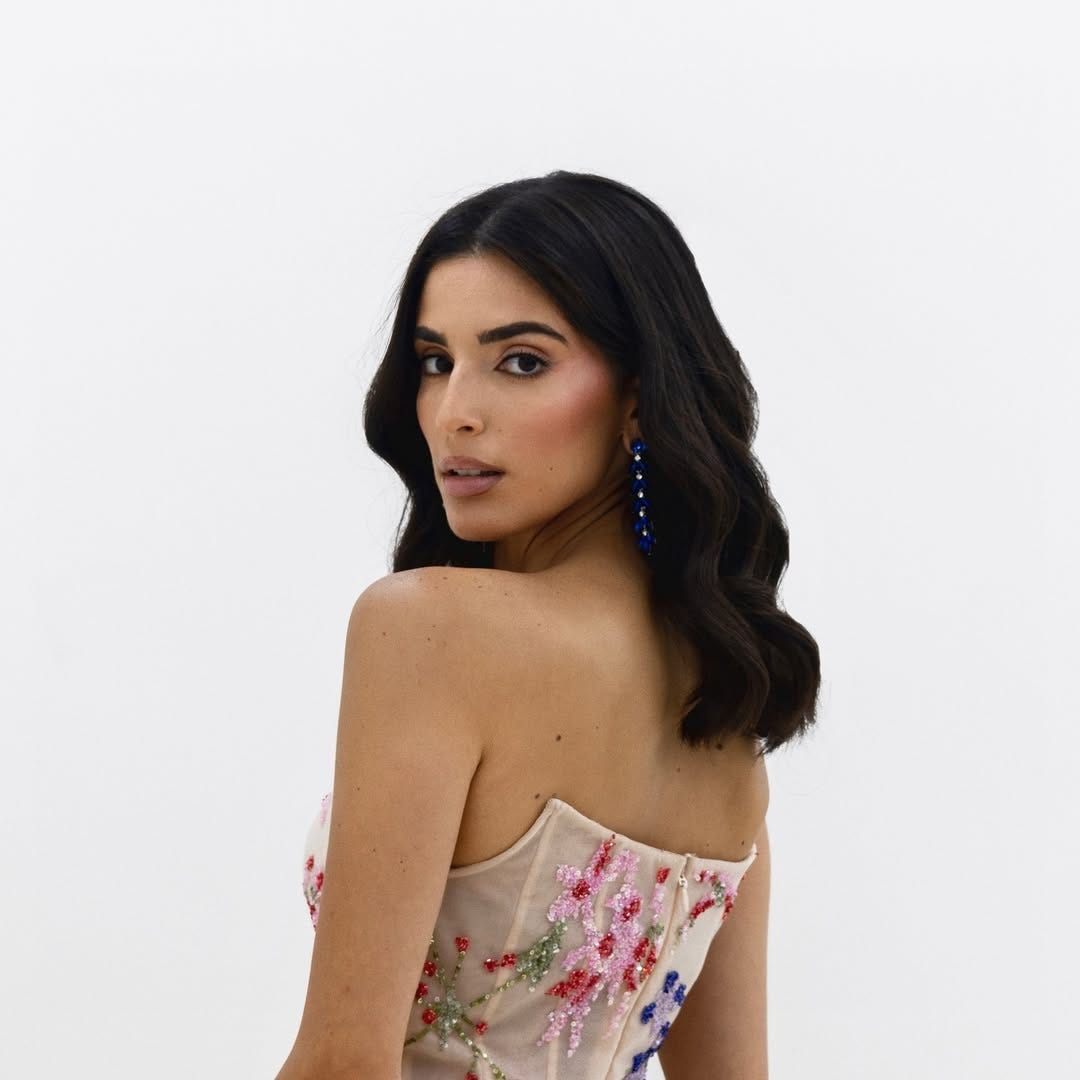
I don’t even know how it happened, but a while back, I stumbled upon one of Saja Kilani’s poems on TikTok. Instantly, I was captivated—her words brought me to tears. And I wasn’t even sure why. We come from completely different cultural backgrounds. I’m Dutch and have never been to the Middle East; she’s Palestinian-Jordanian-Canadian. Yet something about her voice—so peaceful and soothing—her presence, and the way she effortlessly carried me through her world and heritage resonated deeply.
Perhaps it was also the time we are living in. With the ongoing genocide and repression of Palestinians, the global political response to it, and the silencing of arab voices here in Germany, where I live, her poetry felt even more urgent. But beyond that, it was the sheer beauty of her words—the way her spoken word reveals the richness of Arab culture, history, and resilience.
I wanted to know more about her, but when I tried Googling her, I found surprisingly little—aside from a collaboration with the hugely popular singer Saint Levant. That only made me more curious.
So, I took the plunge and sent her a message on Instagram, not expecting much. But to my absolute surprise and joy, she replied and agreed to this interview. And now, here we are.
Saja is an actress, poet, and filmmaker, passionate about storytelling in all its forms—on screen, on stage, and through the power of spoken word. Her poetry explores identity, heritage, and resistance, giving voice to experiences that are both deeply personal and universally felt.
I am beyond excited to introduce you to Saja and the power of her words.
Hi Saja, it’s so nice to meet you! Let’s start at the beginning—what draws you to poetry? Was there a specific moment when you realized that words—spoken or written—had power?
Hi Marieke, it’s so nice to meet you too! Thank you for having me be part of your series; I’m honored. I love that you mentioned the power of words because that’s truly what draws me to poetry. Everything in life is driven by words, politically, socially, and culturally. I learned not to underestimate the power of words through, ironically, bullying. A girl called me a “snitch” back in 6th grade, and I had to Google what that meant. Words, when used correctly, have the power to create change. One specific moment that made me realize this was sharing my poem, Dear Vitiligo, which addresses a skin condition I have but ended up helping people with their own insecurities. Finding out that my words had a tangible effect on someone amplified my purpose with my art.
What inspires you as a poet? Are there particular themes, personal experiences, or other artists (poets, musicians, filmmakers) that influence your work?
Revolutionary art inspires me. What I mean by that simple yet intrinsic phrase is that art which has had a significant impact on culture is what drives me as an artist. Of course, part of that includes legendary figures like Mahmoud Darwish, Khalil Gibran, Maya Angelou, and even Beyoncé; not a poet, but undeniably a revolutionary artist. My work is influenced by power and by those who have demonstrated it through their art. It’s quite refreshing to see how creativity can break boundaries and build doors for those who have never been given the chance to enter.
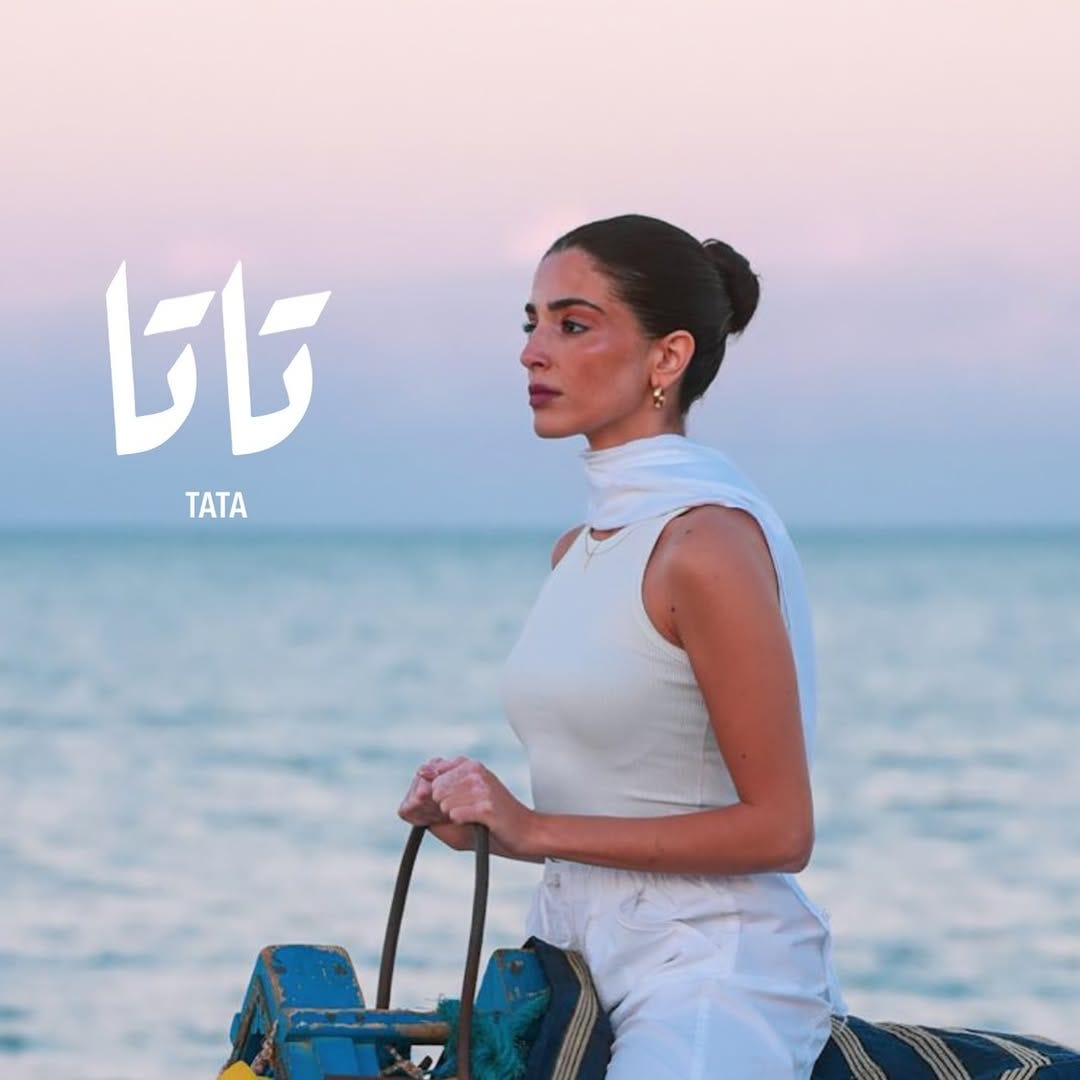
I instantly fell in love with your poem Tata, a collaboration with your grandmother. It’s such a beautiful, intimate piece. How did this poem come to life, and how has she—or other women in your family—influenced your art?
Thank you; it means a lot to me. TATA is a poem that wasn’t planned. The poem itself tells the story of how working with my grandmother, Tata, on my first Arabic poem transformed into the poem itself. I decided to share how art healed her because she experienced a tragic loss last year and has been trying to recover from it ever since. But poetry seemed to bring her back to life and gave her a reason to continue. The women in my family are incredibly strong, and my father is a big advocate for female empowerment, so you can imagine how easy it is for me to tap into that. It truly is a blessing.
Your poetry beautifully captures the essence of the Middle East—its culture, its people, its soul—but also its struggles. If someone unfamiliar with the region only knew about it through the media, what would you want them to see instead?
What a great question. I think the most important yet often overlooked response is to go beyond the media and engage directly with Arab people themselves. The media presents a selective narrative, often shaped by politics and external interests, but the reality is far more complex and deeply human. If you truly want to understand the Arab world, its culture and its people, start by listening to those who live it. Follow Arab creators on social media, watch their films, read their literature, and listen to their music. Art is one of the most honest reflections of a people’s experience. And most importantly, have real conversations. Ask any Arab you know about their life back home, their dreams, their struggles, and their joys. I promise you, your perspective will shift in ways you never expected.
Your work often speaks to war and repression, particularly in Palestine. Do you see your art as a form of activism? What do you hope people take away from your words?
My art is about my personal experiences and my identity. If my identity is deemed political, so be it. But what I try to highlight with my work is the human connection that is often ignored. In war, children, women, and men are reduced to the term ‘civilians,’ which inevitably dehumanizes people, again, the power of word choice. I do my best to prioritize human stories that are forgotten behind numbers. I hope my art can help people see that.
Female empowerment seems to be another strong theme in your work—not just in what you write about, but also in the voices you choose to amplify, like your grandmother’s. What role does female storytelling play in your art?
Female storytelling is something I deeply value. It is a core part of who I am and who I strive to be. I am inspired by powerful women who have repeatedly shown how powerful our voices are. I embody that in my presence, the way I speak, and the way I carry myself. Women are just so cool, and I feel that energy passed down from my ancestors when I perform.
Beyond poetry, you’re deeply passionate about cinema and promoting Arab female inclusivity in film. If someone wanted to explore Arab cinema through the lens of your values—storytelling, representation, and heritage—what’s one film you’d tell them to watch?
That’s a tough question, and I’m not sure I can pick just one answer. However, I do think that more recent films coming out of the region are gradually changing the way Arabs are portrayed in cinema. They are beginning to reflect how we actually look, as opposed to the typical, inaccurate depictions of Arabs as terrorists or the stereotypical portrayal of women as only hijabi. It’s important to recognize that not all Muslim women wear the hijab, and there are also Christian Arabs. I’m particularly excited about a film I’m involved in, though I can’t share the details just yet. But do keep an eye out for it this year!
Your first Arabic prose was featured on Saint Levant’s song Deira. How did that collaboration come about?
I received a random message from Marwan (Marwan Abdelhamid known as Saint Levant) asking me to hop on a call. He shared the idea he had for Deira’s intro and asked if I was interested in writing and narrating it. I love his music, so I asked to hear the song. I remember I was out with my sister Sara, and we were about to leave, so I asked her to drive. I listened to the song in the car and was immediately inspired, so I started writing. We were about 20 minutes away from the house, and by the time we arrived, I had written two options. I called him, he liked the first one, and I recorded it on my phone because he wanted that effect. That was one of the quickest collaborations I’ve had.
You’ve had the opportunity to perform your poetry live in incredible spaces, like Galeries Lafayette Doha with Palestinian fashion brand Reema Dahbour. Has there been a collaboration or creative moment that felt like a turning point for you?
Working with Reema was definitely one of my highlights. She is such a lovely, talented person, and collaborating with her felt like joining artistic forces. I recently performed at Ila Sawt, an event held in Amman, and I’m yet to share the footage from that performance. It solidified my involvement in live poetry. But I must say, a turning point for me was back in 2019. I was in Toronto at the time and and I booked a lead role in my first professional play, Tales of a City by the Sea written by Samah Sabawi. What was supposed to be a two-week run turned into a pivotal moment in my life. It was then that I decided to change careers from law to acting. Acting introduced me to artistic expression and spoken word, so I wouldn’t be here answering questions if I hadn’t made that call.
If you could dream up your perfect project—whether poetry, film, or something entirely different—what would it look like?
I’m currently working on a project of that kind, actually. It’s too early to share, but I will say that it will encapsulate everything I love to do. I’m taking my time with it, but I hope it will come to fruition by the end of this year.
And since Pieces of the Mosaïque is all about amplifying voices—who is an artist, creative, writer, or filmmaker you think deserves more recognition right now?
I feel fortunate to be surrounded by friends who are artists and creatives that I admire, including Zeyne, Ash, Hajiba Fahmy, Baider Burman, Bayou, and Abdallah AlKhatib, all of whom deserve more recognition.
And last but not least, shameless promotion time—where can people connect with you, experience your poetry, and support your work?
I recently started sharing my poetry on streaming platforms like Apple Music and Spotify, starting with TATA. I’ll be sharing more of my work there, but for now, most of my work and updates can be found on my Instagram page: @sajakilani.
That’s all lovelies! Now, I highly recommend you listen, comment, and share Saja’s art—because it’s truly incredible.
Editors note: (September 2025): A few months after this interview, Saja Kilani appeared in the film The Voice of Hind Rajab, which premiered at the Venice Film Festival on 03-09-2025 to a 24-minute standing ovation. Directed by Tunisian filmmaker Kaouther Ben Hania, the film tells the story of a five-year-old girl and her family killed by Israeli IDF forces in Gaza last year.
At Venice, Saja gave an incredible speech calling for an end to the mass killing, starvation, dehumanisation, destruction, and ongoing occupation of Palestinians. Her words deserve all the space they can get.
The film received backing from Hollywood actors Brad Pitt, Joaquin Phoenix, Rooney Mara, Alfonso Cuarón, and Jonathan Glazer, who joined the project as executive producers.
Saja Kilani's powerful statement about ending the destruction and genocide in Palestine wasn't conveyed only through her strong speech at the premiere of "Voice of Hind Rajab" at the Venice Film Festival, she also spoke through the way she was dressed.
The custom 12-foot dress she wore, designed by Farah Hourani, carried profound symbolism: each foot of leather represented one of the 12 days that Hind Rajab's body remained in the car. Hind was the 5-year-old girl killed by Israeli forces last year, whose story the film tells. A single Arabic numeral "12" was embroidered on her glove, complemented by earrings featuring her Arabic initials, created by Bilarabi.
I continue to admire how Saja Kilani uses her platform (poetry, acting and presence) to inspire change and to give a voice to Palestin.


💗💗💗💗💗